Pelourinho In Color

Sofia Alvarez
| 19-05-2026
 · Travel team
Friends, Pelourinho is Salvador da Bahia at street level: steep lanes, bright facades, tiled balconies, open squares, percussion rhythms, and viewpoints over the lower city. The area is famous, but it feels better with a practical plan because streets, safety, tickets, transport, and food prices all shape the day. The right route keeps the experience colorful, informed, and comfortable.
Start Early
Morning is the best time to begin. The light is softer, the streets are calmer, and walking uphill feels easier before the heat rises. Start around Terreiro de Jesus, move through Largo do Pelourinho, then continue toward viewpoints and museum spaces before lunch. Staying within the main visitor streets keeps navigation simple.
Pelourinho is walkable, but the slopes are real. Comfortable shoes matter more than style, and small bags are easier in crowded lanes. Use registered taxis or app rides after dark rather than wandering unfamiliar side streets. A short app ride within central Salvador often costs R$15 to R$35, about $3 to $7.
Getting There
From Salvador airport, Pelourinho is usually 45 to 70 minutes away by road, depending on traffic. App rides commonly cost R$80 to R$140, about $15 to $27, while official taxis may be higher. Budget travelers can use metro and bus combinations for far less, often under R$15, about $3, but the route is less convenient with luggage.
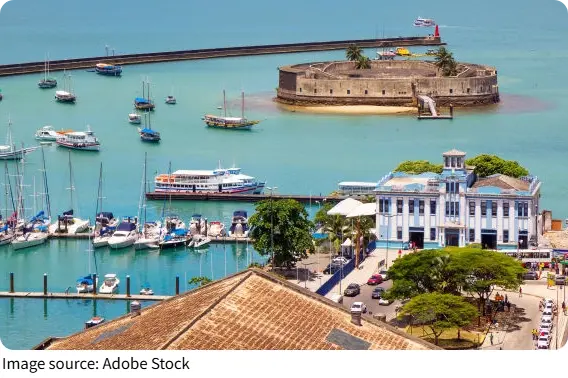
The Lacerda Elevator links the lower and upper city and is one of Salvador's most useful short rides. The fare has long been symbolic, often around R$0.15, less than $1, though small cash is helpful. It is best used in daylight when combining Pelourinho with Mercado Modelo, waterfront views, or the lower-city transport area.
Walking Costs
A self-guided Pelourinho walk can be almost free, aside from snacks and any museum entries. Guided walking tours usually cost R$80 to R$180 per person, about $15 to $35, depending on group size and language. Private guides can run R$250 to R$500, about $48 to $96, but they add context and help with route choices.
Small museums and cultural houses in the area often charge modest entry, commonly R$10 to R$40, about $2 to $8. Check opening days before building a route, because some spaces close on certain weekdays. If visiting more than two paid stops, choose based on theme rather than collecting tickets; Pelourinho is strongest when walking time remains unhurried.
Sound And Color
Music is part of Pelourinho's identity, especially percussion groups, courtyard rehearsals, and street performances. Public performances may be free to watch, while scheduled shows or rehearsals can cost R$60 to R$180, about $12 to $35. Buy from official channels or trusted venues, and confirm start times because programs can change.
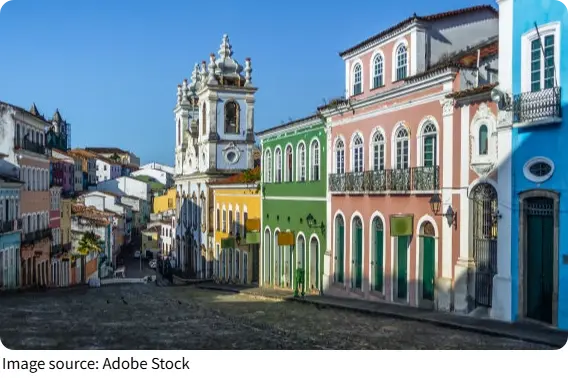
The streets themselves are the other attraction. Painted facades, balconies, stairways, and tiled details make short distances take longer than expected. Photography is best before noon or late afternoon, when the color is rich without harsh glare. Always ask before photographing people closely, especially performers, vendors, and anyone working in the street.
Food Plan
Bahia's flavors are a major reason to linger. Acaraje or tapioca snacks can cost R$12 to R$25, about $2 to $5, while fresh juice or coconut water often runs R$8 to R$15, about $2 to $3. A casual lunch plate in or near the visitor zone may cost R$35 to R$70, about $7 to $14.
Dinner in a polished restaurant around the historic center can run R$80 to R$160 per person, about $15 to $31, before premium extras. Travelers watching costs should eat lunch as the main meal and keep dinner simple. Prices rise around main squares, so check menus before sitting and avoid assuming every colorful corner has the same value.
Stay Areas
Sleeping inside Pelourinho gives atmosphere and easy morning access, but noise and steep streets are part of the deal. Simple guesthouses can start around R$180 to R$300 per night, about $35 to $58. Comfortable boutique stays often run R$350 to R$700, about $67 to $135, depending on room view, season, and breakfast.
Barra and Rio Vermelho are alternatives for travelers who want beaches, wider dining choices, and easier evening movement. App rides from those areas to Pelourinho commonly cost R$25 to R$60, about $5 to $12. For a first visit, two nights near the historic center plus extra nights by the coast is a balanced plan.
Final Rhythm
Pelourinho is strongest when treated as a walking experience rather than a checklist. Its color, music, heritage spaces, and Bahia food make the day feel layered, but practical choices around timing, transport, and guided context matter. Would you rather explore it slowly at street level, or join a guided walk that turns the painted lanes into a deeper story?