What to See at Taj Mahal

Pardeep Singh
| 27-05-2026
 · Travel team
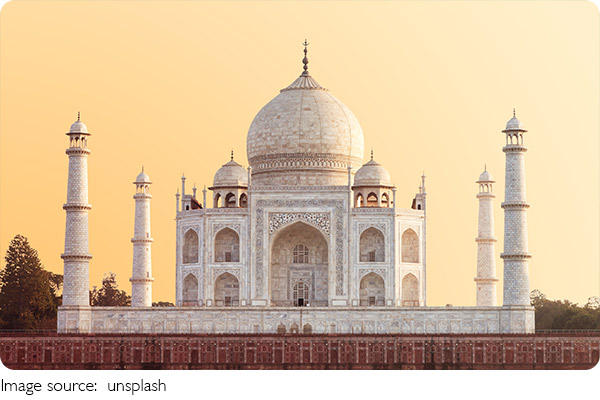
Do you know, Lykkers? Standing in front of the Taj Mahal in Agra feels like stepping into a place where time slows down and every detail has meaning. The monument shifts in appearance throughout the day—soft pink in the early morning, bright white under the midday sun, and warm golden tones as the evening approaches.
It is a place where architecture, history, and emotion come together in a powerful way. Few landmarks in the world can match its presence. People from around the world come here not only to see it, but to experience the atmosphere it creates. Let’s explore what makes this masterpiece so remarkable!
1. The Grand Architectural Marvel
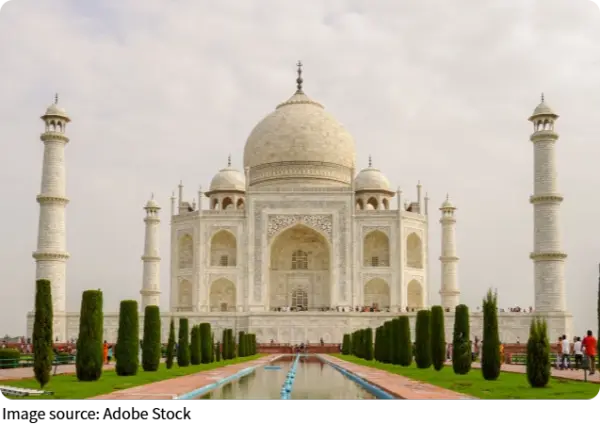
The visit begins at the main gateway, a large red sandstone structure decorated with arches, carved patterns, and detailed calligraphy. This entrance is designed to slowly reveal the Taj Mahal, building anticipation as you walk forward. As you move through the gate, the monument gradually appears at the end of a long, perfectly aligned garden pathway. The white marble structure stands in perfect symmetry, with a central dome rising above the complex and four minarets positioned at each corner.
Taj Mahal
The entire complex covers around 22 acres, arranged in a carefully planned Persian-style garden layout. Long water channels and reflecting pools mirror the monument, creating a balanced and visually striking scene that guides the eye directly toward the Taj Mahal.
TAJ MAHAL (Agra, India): full tour
Luxury Travel Expert
2. The Story Behind the Monument
The Taj Mahal was built by Mughal Emperor Shah Jahan in memory of his wife Mumtaz Mahal. Their relationship is remembered in history as one of deep connection and loyalty. After Mumtaz Mahal passed away during childbirth, Shah Jahan commissioned a structure that would preserve her memory in the most enduring form possible.
Construction took approximately 22 years and involved around 20,000 skilled artisans from different regions, including India, Persia, and Central Asia. Craftsmen such as stone cutters, calligraphers, painters, and dome builders all contributed to the creation of this architectural masterpiece. Inside the central chamber, the cenotaphs of Shah Jahan and Mumtaz Mahal rest quietly, representing their lasting bond and the story behind the monument.
3. Poetry Carved in Marble
The beauty of the Taj Mahal lies in its extraordinary detail. The marble surfaces are decorated with fine floral motifs and geometric patterns created using the pietra dura technique, where semi-precious stones are carefully inlaid into the marble. Materials such as lapis lazuli, onyx, jasper, agate, and amethyst were shaped and placed by hand with great precision.
This craftsmanship reflects a blend of Persian and Indian architectural styles, creating a design that feels both unified and highly detailed. Every section of the structure reveals careful planning and skilled workmanship, making the monument visually rich from every angle.
4. Views Around the Complex
The Taj Mahal changes character depending on where and when it is viewed. Located near the Yamuna River, the monument creates striking reflections on the water, especially during sunrise and sunset.
The shifting sky adds to the effect, changing the overall mood of the scene throughout the day.
- Morning light brings a soft pink tone
- Midday highlights the bright white marble
- Sunset creates deep golden and orange hues
- Clear nights give a calm, glowing silhouette
Different viewing points across the complex offer unique perspectives, each highlighting the symmetry and scale of the structure in a different way.
Lykkers, the Taj Mahal is more than a historic monument—it is an experience shaped by light, space, and story. From the grand entrance to the detailed marble carvings and the emotional history behind its creation, every part of the site adds depth to what you see. It is a place that encourages you to slow down and observe carefully rather than rush through.
If you ever visit, take your time to move through each section, notice how the light changes on the marble, and absorb the atmosphere around you. And before you leave, ask yourself: Will you simply pass through the Taj Mahal, or will you take time to truly notice the details that make it unforgettable?