Sweet Pear World

Naveen Kumar
| 27-02-2026
 · Cate team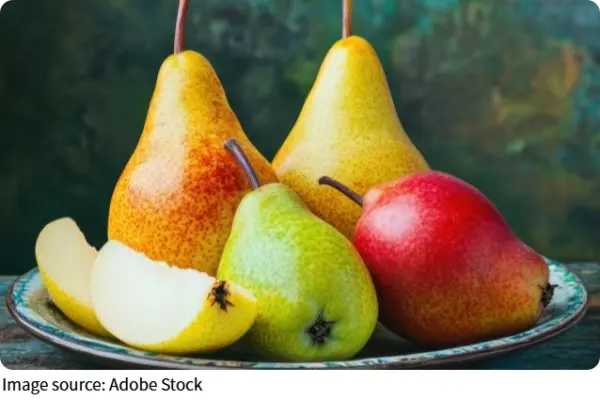
Hello Lykkers. Today we explore pears in a simple and clear way. Pears are common fruits that grow on trees and are loved around the world. They taste fresh, juicy, and slightly sweet.
Many people enjoy eating pears as a snack or using them in cooking. Let us take a closer look at where they grow, how they develop, and why they matter in our daily life.
Where Pears Grow And How They Develop
Pears grow on medium-sized trees that belong to the rose family. These trees can reach up to 20 meters tall. They grow well in temperate climates and are widely planted in Europe, Asia, and North Africa. Today, many countries cultivate pears for local use and international trade.
Most pear trees lose their leaves in winter. When spring comes, white flowers bloom on the branches. Each flower has five petals and many small stamens. Bees play an important role in pollination. They move from flower to flower and help the tree produce fruit. Without pollination, fruit development cannot happen smoothly.
After pollination, small green fruits start to grow. During summer, the fruits gradually enlarge and store water and nutrients. Farmers usually harvest pears from late summer to mid autumn. The harvest time depends on the variety and climate. Proper care during growth helps the fruit become sweet and juicy.
Different Types, Shapes And Textures
There are thousands of pear varieties around the world. Experts estimate that about 3,000 types exist. Because of this diversity, pears show different shapes, colors, and tastes.
Some pears are round like apples. Others have the classic shape with a narrow top and a wider bottom. Wild pears are often small and firm. Cultivated pears can grow much larger, sometimes reaching up to 18 centimeters in length.
The skin color also varies. We can find green, yellow, brown, and red pears. Some skins are smooth, while others may have light texture or spots. The flesh inside can be crisp or soft depending on the variety and ripeness. When pears ripen, their sweetness increases and their juice becomes richer.
These differences make pears interesting for people who enjoy exploring new flavors. We can try different types to discover our favorite taste and texture.
What Is Inside A Pear
A pear contains water, fiber, natural sugar, vitamins, and minerals. It is known for its refreshing juice and light sweetness. The fruit has a core in the center that holds the seeds. Around the core is the edible part that we eat.
Because pears are rich in fiber, they support healthy digestion. Fiber helps our body process food more smoothly. Pears also provide vitamin C and other nutrients that support general wellness. Eating fresh fruit regularly can contribute to a balanced diet.
People enjoy pears in many ways. We can eat them fresh as a snack. They can also be dried for longer storage, canned for convenience, or pressed into juice. In cooking, pears are added to salads, desserts, cakes, and warm dishes. Their natural sweetness improves flavor without needing too much added sugar.
Uses Beyond Food
Pears are not only valuable as food. The wood from pear trees is strong and smooth. Craftsmen use it to make furniture and musical instruments. The wood surface is stable and easy to shape, which makes it suitable for detailed work.
In some areas, pear trees are planted as ornamental trees. Their spring flowers bring beauty to gardens and parks. The trees also provide shade and improve the local environment. Farmers and gardeners appreciate pear trees for both practical and decorative purposes.
Why Pears Matter In Our Life
Pears play an important role in agriculture, nutrition, and daily enjoyment. They grow quietly on trees but support many people worldwide. Farmers care for them, bees help pollinate them, and consumers enjoy their taste.
With thousands of varieties available, pears offer choices for different preferences. Some people prefer crispy pears, while others like soft and juicy ones. The fruit adapts well to various climates and farming systems.
Lykkers, have you tasted different pear varieties before? Have you tried fresh pears directly from a tree or enjoyed them in a dessert? We hope this article helps you understand pears better and appreciate their value. Let us explore nature together and enjoy the simple beauty of fruits like pears in our daily life.